
Driving on I-10 between Marana and Tucson is dangerous enough without a blowout. With summer asphalt temperatures reaching 150F, your tires are literally being cooked as you drive. This extreme heat degrades rubber compounds faster than anywhere else in the country. Here is a comprehensive guide to identifying blowout risks before they leave you stranded on the shoulder.
1. The "6-Year Rule" for Tucson Drivers
In humid climates, tires can last up to 10 years. In the dry, baking heat of the Sonoran Desert, the oils in the rubber evaporate much faster, leading to "Dry Rot." Even if you have plenty of tread left, tires older than 6 years are structurally compromised and unsafe for Arizona highways. To check your tire's age, look for the DOT code on the sidewall. The last four digits tell you the week and year of manufacture (e.g., "2219" means the 22nd week of 2019). If your tires are nearing that 6-year mark, replace them immediately.
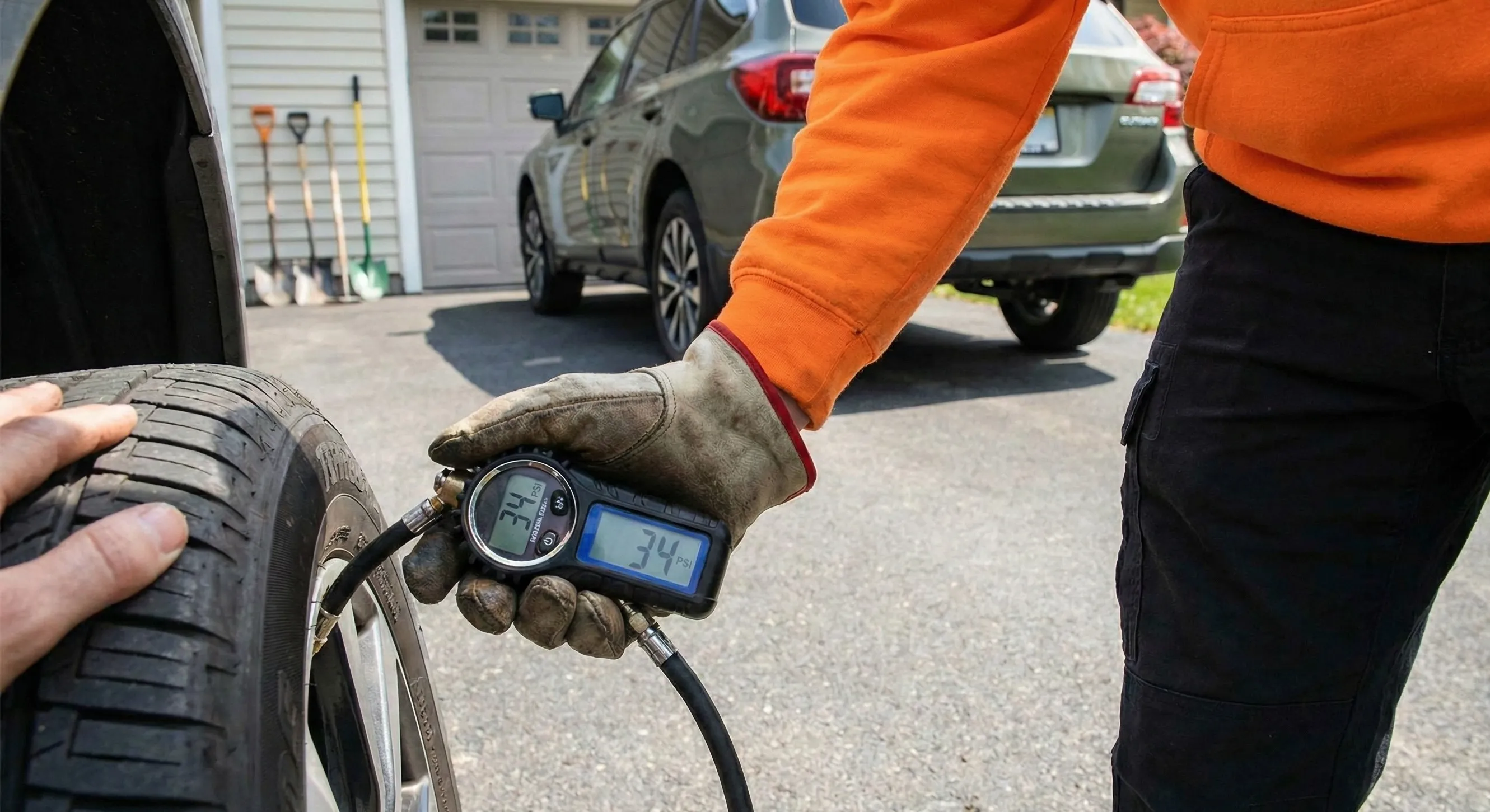
2. Proper Inflation Checks: The Cold Truth
Under-inflated tires flex more as they roll. This excessive flexing generates internal heat. When you combine that friction heat with 110-degree air temps and 150-degree asphalt, the tire's internal structure begins to delaminate, leading to a catastrophic blowout. Always check your PSI when the car is "cold" (hasn't been driven for at least 3 hours). Never let air out of hot tires to lower the pressurethat pressure rise is normal and necessary.
3. Critical Warning Signs While Driving
Your car often tells you a tire is failing before it happens. Listen to it:
- Steering Wheel Vibration: If your steering wheel starts to shimmy or shake, especially at speeds over 65mph, you may have a separated belt inside the tire. This is a critical warning that failure is imminent. Pull over immediately.
- Thumping Sound: A rhythmic "thump-thump-thump" that speeds up as you drive usually indicates a bubble in the tread or a flat spot. This weak point can burst under highway stress.
- Pulling to One Side: If the car drifts hard to the left or right, it often signals a slow leak, a separated tire, or an alignment issue that is rapidly wearing down one side of the tread.
4. Road Debris Awareness on Tucson Streets
Tucson roads, especially near construction zones on I-10, Broadway, and Grant, are notorious for debris. Nails, screws, and metal scraps are everywhere. Scanning the road ahead isn't just about watching traffic; it's about spotting debris in your lane. If you can't safely swerve, try to hit debris straight on rather than with the weaker sidewall. However, the best defense is maintaining a safe following distance to give yourself reaction time.
SAFETY TIP: If you hear a loud pop and the car swerves, DO NOT slam on the brakes. This shifts the vehicle's weight forward and can cause a spin. Instead, grip the wheel firmly to maintain your lane, let off the gas pedal to slow down naturally, and carefully coast to the shoulder.
If you suspect a tire issue or have hit debris, don't risk driving on the highway. Pull over in a safe parking lot and call for a professional tire change. We carry low-profile jacks for sports cars and heavy-duty jacks for trucks.
Blowout on the Highway?
We'll change your tire and get you back on the road safely.
TIRE CHANGE - $90 FLAT RATE