
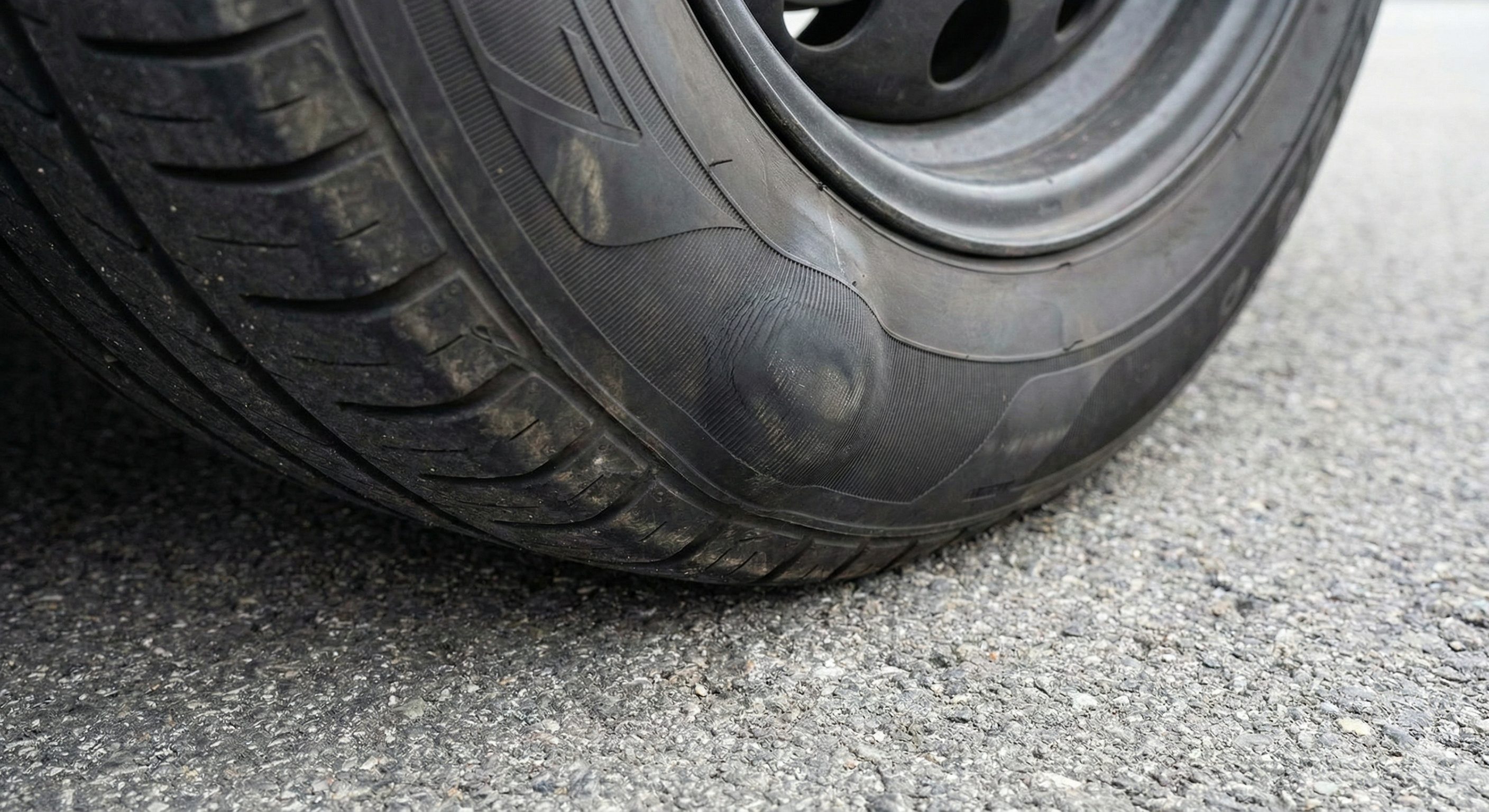
That bubble on your sidewall isn't just a blemish; it's a ticking time bomb, especially at highway speeds on the I-10. Ignoring it could lead to a catastrophic blowout. Heres why this type of damage is so dangerous, why it can't be fixed, and when you need to take action before you need an emergency tire change.
The Danger of a Sidewall Bubble
A bubble or bulge on the sidewall of your tire indicates severe internal damage. It happens when the tire's inner liner is damaged, allowing air to escape and get trapped between the inner layers and the outer rubber sidewall. In Tucson's extreme heat, this pressure builds up even faster.
- The Cause: This is most commonly caused by a significant impact, such as hitting a deep pothole on Grant Road, striking a curb, or running over large road debris. Driving on a flat or severely underinflated tire can also cause this damage.
- The Risk: The bubble is a weak point in the tire's structure. At high speeds, the combination of heat build-up, centrifugal force, and road impacts puts immense stress on this weakened area. It can rupture unexpectedly, leading to a sudden and complete loss of air pressurea blowoutwhich can cause you to lose control of your vehicle.
SAFETY WARNING: If you see a bubble, do not drive on the highway. Replace the tire with your spare immediately and get a new tire right away. If you don't have a spare, call Fasty's for a mobile tire service.
Why You Can't Patch Sidewall Damage
You might wonder if a patch can fix the problem. The short answer is no. No reputable tire shop in Pima County will repair sidewall damage, and here's why:
- Different Construction: The sidewall is constructed differently than the tread. The tread area has steel belts for reinforcement, which provides a stable base for a patch. The sidewall is thinner and more flexible to absorb road shocks.
- Constant Flexing: As your tire rolls, the sidewall constantly flexes and bends. A patch applied to this area would not be able to withstand this continuous movement. It would quickly loosen and fail, leading to another leak or a blowout.
- Structural Integrity: The damage that caused the bubble is internal. A patch on the outside would do nothing to repair the compromised inner structure of the tire.
When Cracks Mean It's Time to Swap
While a bubble is an immediate emergency, cracks are a sign of a slower, but still serious, problem. This is often called dry rot, and it's accelerated by the Arizona sun.
- What It Is: Over time, the rubber compounds in a tire break down due to exposure to UV rays from the sun, harsh chemicals, and natural aging. This makes the rubber brittle and leads to cracking.
- When to Worry: Small, superficial cracks on the surface might not be an immediate threat, but they are a warning sign. You need to replace your tires when:
- The cracks become deep or widespread.
- You can see the fabric cords underneath the rubber.
- Cracks appear near the bead (where the tire meets the wheel) or in the tread grooves.
- Your tires are over 6-10 years old, regardless of tread depth. Most manufacturers recommend replacing tires after this period due to rubber degradation.
Action Plan for Sidewall Survival
- Inspect Regularly: Get in the habit of visually inspecting your tires at least once a month. Look for any bulges, bubbles, cuts, or deep cracks on the sidewalls.
- Don't Gamble: If you find a bubble, treat it as an emergency. Put on your spare and get a replacement tire. Do not drive at highway speeds.
- Monitor Cracks: If you see fine cracks developing, start planning for a new set of tires. If the cracks are deep, don't waitreplace them.
- Avoid Impacts: Be vigilant while driving to avoid potholes, curbs, and debris that can cause the internal damage that leads to bubbles.
Your tires are the only thing connecting your car to the road. Don't take chances with sidewall damage. A new tire is a small price to pay for your safety.
Need a Tire Change ASAP?
If you found a bubble and need to get your spare on, we're 20 minutes away.
CALL FASTY'S: (520) 222-9089