
"Cranking them 'til they scream" is a garage phrase that needs to retire. That final, bone-shaking rattle of an impact gun on a lug nut isn't the sound of safety; it's the sound of damage being done. Getting your wheels tight enough is important, but getting them too tight can be just as dangerous as leaving them loose. This is why a proper professional tire change service always verifies specs.
Heres why precision beats raw power when it comes to your wheel safety.
The Dangers of "Too Tight"
Overtightening lug nuts is a common mistake that can have serious, and expensive, consequences. You might think extra tight means extra safe, but you're actually weakening the connection between your wheel and your car.
- Broken Studs: The wheel studs are the threaded bolts that your wheels mount onto. They are designed to stretch slightly to create a clamping force. However, if you apply too much torque, you stretch the metal past its elastic limit. This permanently weakens the stud, making it brittle and prone to snapping off while you're driving on I-10.
- Stripped Threads: Excessive force can strip the threads right off the stud or the inside of the lug nut. The next time youor a poor roadside assistance techniciantry to remove the wheel to fix a flat tire, the nut will just spin in place, turning a simple job into a major ordeal.
- Warped Brake Rotors: This is a hotly debated topic, but the consensus is that uneven or excessive lug nut torque can cause problems with your brakes. If some nuts are tighter than others, it creates uneven clamping pressure on the wheel hub and brake rotor. When the brakes get hot, this uneven pressure can cause the rotor to deform, or "warp," leading to a pulsating brake pedal and a shaky steering wheel when you stop.
The Solution: Torque Sticks and Torque Wrenches
Professional mechanics use specific tools to ensure lug nuts are tightened to the exact right spec, not just "until it feels tight."
- Why We Use Torque Sticks: You've probably seen these colorful bars that go between an impact gun and a socket. A torque stick is a torsion bar that is designed to flex at a specific torque limit. When an impact gun hits that limit, the stick twists and absorbs the excess energy instead of transferring it to the lug nut. This prevents the impact gun from hammering the nut on too tightly. Think of it as a safety buffer.
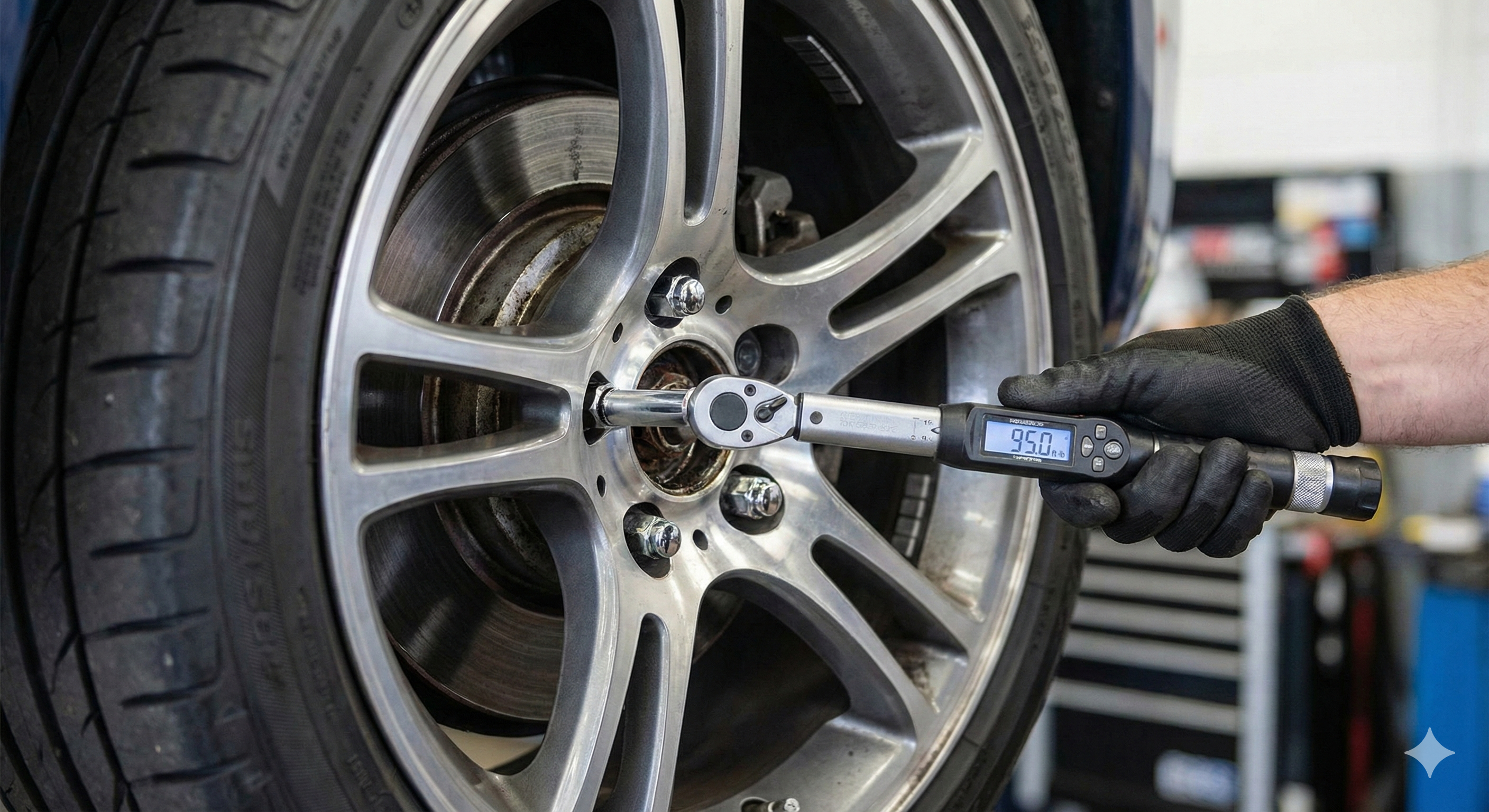
- The Final Step: The Torque Wrench: While torque sticks are great for getting close without going over, they aren't perfect. The gold standard for safety is finishing the job with a calibrated torque wrench. After using a torque stick, a mechanic will take a hand-operated torque wrench, set it to the vehicle manufacturer's exact specification, and tighten each nut in a star pattern until the wrench clicks. This click confirms that the nut is at the precise tightness requiredno more, no less.
Why Manufacturer Specs Matter
Every car is different. A 6,000-pound truck needs a different amount of clamping force on its wheels than a 2,500-pound compact car. Engineers calculate the exact torque needed based on the vehicle's weight, power, wheel size, and stud thickness.
- Finding Your Spec: The correct torque specification for your lug nuts can be found in your vehicle's owner's manual. It's a specific number, usually measured in foot-pounds (ft-lbs), like 80 ft-lbs or 140 ft-lbs.
- Sticking to the Number: Ignoring this number and just guessing is a gamble with your safety. Too loose, and the wheel could vibrate off. Too tight, and you risk breaking components.
The next time you see someone securing a wheel, make sure they aren't just letting the impact gun rip. A torque stick is a good sign, but the final click of a hand torque wrench is your assurance that the job was done right. At Fasty's, we treat every wheel like our own family is riding on it.
Need a Tire Change Done Right?
We use torque sticks and verify specs on every job to keep you safe.
CALL FASTY'S: (520) 222-9089