Owners of Toyota Prius, Tesla, and other hybrids often forget they have two batteries. While the massive High Voltage (HV) battery drives the wheels, a standard 12V lead-acid battery runs the computers, lights, and locks. In Tucson, that small 12V battery is just as vulnerable to heat as any other car's, and when it goes, your high-tech ride isn't going anywhere.
The "Chicken and Egg" Problem
If your small 12V battery dies, the vehicle's computer system cannot wake up. This is critical because the computer controls the high-voltage relays. Without the 12V signal, the relays cannot close, and the massive High Voltage battery remains disconnected from the motor. Result? Your $40,000 hybrid is a brick that won't start, even if the main battery is fully charged. This is the #1 reason we get calls from panicked hybrid owners in parking lots across Tucson.
Heat Management for Hybrids in Tucson
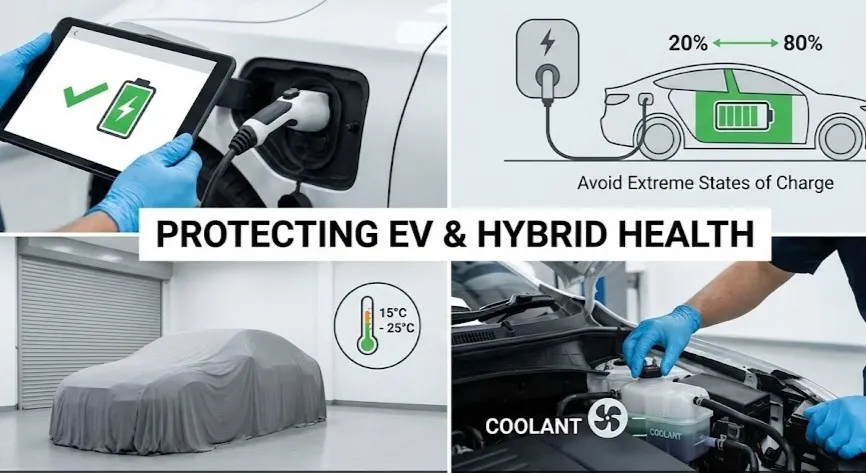
Heat is the enemy of all batteries, but hybrids have unique vulnerabilities. The internal cooling systems for the HV battery rely on cabin air, making your A/C usage critical. Unlike a standard car battery, which sits in the hot engine bay, your hybrid battery is usually in the rear, but it still needs care.
- Keep Air Vents Clear: Most hybrid batteries are air-cooled, with intake vents in the back seat (often near the floor or side of the seat). If you block these with gym bags, dog blankets, or boxes from Costco, the battery overheats. This forces the system to limit power and can cause rapid degradation of expensive battery cells.
- Park in Shade: Just like standard cars, internal cabin temperature affects battery life. Parking in a garage or under solar panels at the mall helps significantly by keeping the starting temperature lower.
- Drive Often: Hybrids, especially older models with NiMH batteries, don't like to sit idle. If you leave your car parked for weeks in the Tucson sun without driving it, the battery cells can become unbalanced, leading to warning lights and expensive repairs.
JUMP START WARNING: Be very careful jumping a hybrid. Connecting cables to the wrong terminals (or worse, the inverter) can cause thousands of dollars in damage to the electrical system. Never use a high-amperage commercial jump starter meant for semi-trucks on a Prius. If you aren't 100% sure where the 12V posts are, call a professional immediately.
When to Replace the 12V?
Since the 12V battery doesn't "crank" an engine like in a gas car, you won't hear the classic slow-start sound. Instead, failure signs are weird electrical glitches: dash lights flickering, the radio resetting, the smart key not being recognized, or the "Ready" light failing to come on. Because of the extreme heat in Southern Arizona, we recommend replacing the 12V battery every 3 years proactively to avoid being stranded.
Deep Discharge Dangers
If you run a hybrid 12V battery completely dead multiple timessay, by leaving a dome light onit will likely never hold a full charge again. This is because standard lead-acid batteries suffer permanent chemical damage (sulfation) when fully drained. If you've had to jump start your Prius three times in a month, stop hoping it will rechargeit's time for a new battery.
Hybrid Won't Start?
We know how to safely jump start hybrids and EVs without frying your electronics.
HYBRID JUMP START - $80 FLAT