
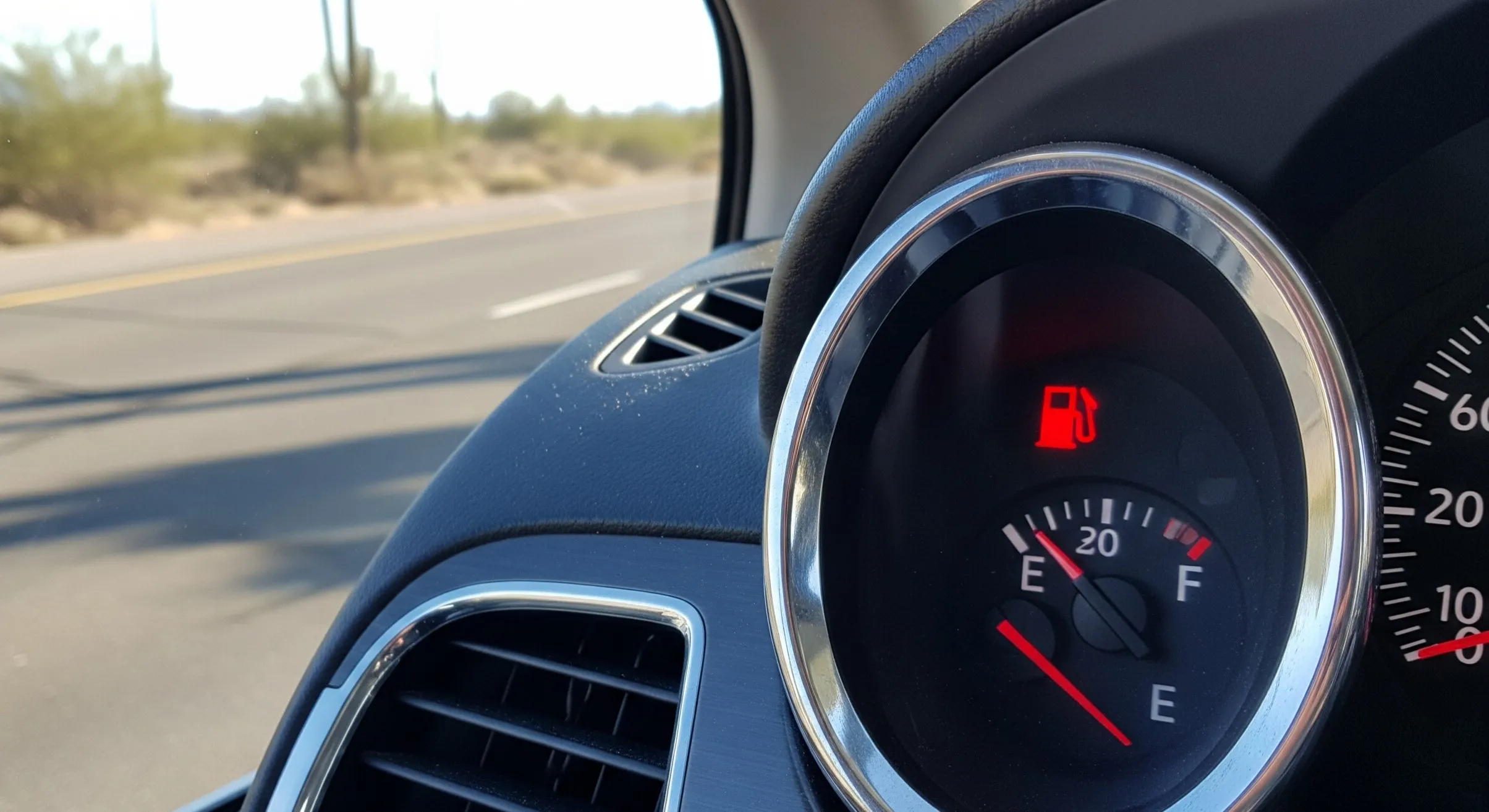
In Tucson, distances between gas stations on outskirts roads like Ajo Way or Valencia can be deceivingly long. Running out of gas isn't just embarrassing; it can damage your vehicle. Here is why you should never let your tank drop below 1/4 in the summer, and what to do if the needle hits "E".
1. The Fuel Pump Cooling Myth (It's Real)
Your car's fuel pump is submerged inside the gas tank. It relies on the gasoline itself to keep it cool. When you drive on "fumes," the pump is exposed to hot air inside the tank. In Tucson's 110F weather, this can cause the pump to overheat and fail prematurely. A fuel pump replacement costs $600-$1000; a tank of gas costs $50. Do the math.
2. Sediment and Clogged Injectors
Over years, sediment settles at the bottom of your gas tank. When you run the tank dry, the pump sucks up this concentrated sludge, which can clog your fuel filter and fuel injectors. This leads to rough idling, poor acceleration, and potential engine damage.
3. Signs You Are Running Dry
- Sputtering / Jerking: The engine will hesitate as the pump gulps air instead of fuel.
- Power Loss: You press the gas pedal, but the car doesn't accelerate.
- Surging: The car might lurch forward unexpectedly as the last drops of fuel reach the engine.
4. What To Do Immediately
If your engine sputters, do not try to make it to the next exit if it's miles away.
- Turn on your hazard lights immediately.
- Shift into Neutral (N) to coast as far as possible.
- Steer toward the shoulder safely. Note: You will lose power steering and power brakes when the engine dies, so steering and braking will require much more physical effort.
DON'T WALK IT: Walking miles to a gas station in Tucson heat is dangerous. Stay with your vehicle, stay in the shade, and call for fuel delivery. We can bring unleaded or diesel directly to your location.